
CPM Scheduling
How Field Changes Derail Construction Progress: A TCR Breakdown
Critical Path Method (CPM) scheduling effectively tracks task completion rates in construction by identifying critical tasks, their duration and dependencies to monitor progress and address delays proactively.
In dynamic construction environments, field changes are inevitable — design modifications, material substitutions, unforeseen conditions and scope changes all contribute to disruption.
👉 One of the most immediate indicators of this disruption is a decline in Task Completion Rate (TCR).
Impact of Field Changes on Task Completion Rate (TCR)
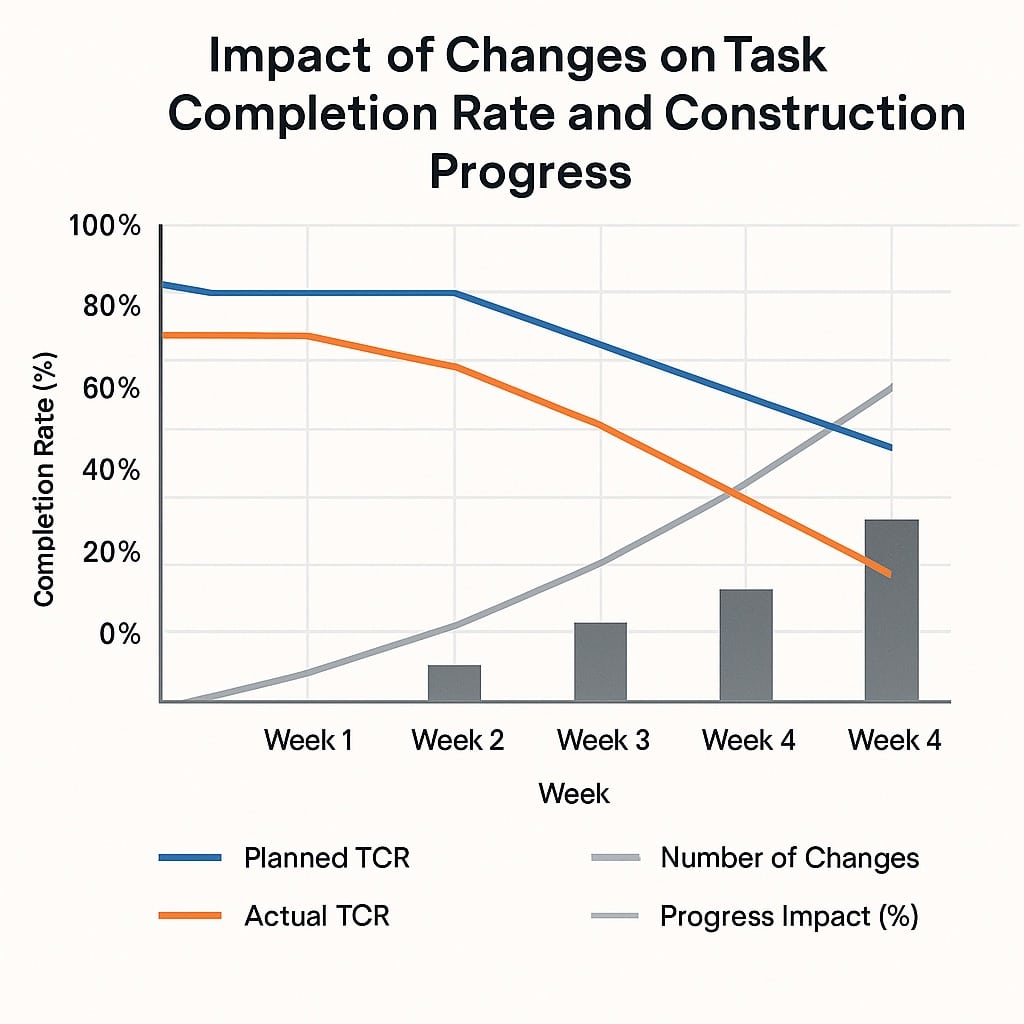
As field changes increase:
-
TCR drops below baseline expectations
-
Workflow efficiency is reduced
-
Project progress slows
-
Rework & coordination demands rise
Why TCR Matters
TCR acts as a leading indicator for:
-
Workflow disruption
-
Delay analysis
-
Likely cost overruns
-
Risk forecasting
By tracking TCR, project teams can spot early warning signs before issues escalate, enabling faster, data-driven decision-making in the field.
Conclusion – Effective Utilization of CPM Scheduling
Integrating TCR into progress tracking enhances project controls and supports better outcomes:
-
Faster project delivery
-
Reduced disputes
-
Improved cost management
At Construction Risk Consultants, we support project managers in navigating excessive changes, mitigating delays, preserving project costs and delivering the documentation needed for effective dispute resolution.
📩 Find out how we can help keep your project on track from kickoff to closeout.
Tags: #ChangeManagement #CPMScheduling #TaskCompletionRate #ChangeOrders #ConstructionProgress #DelayClaimsAnalysis #FieldManagement